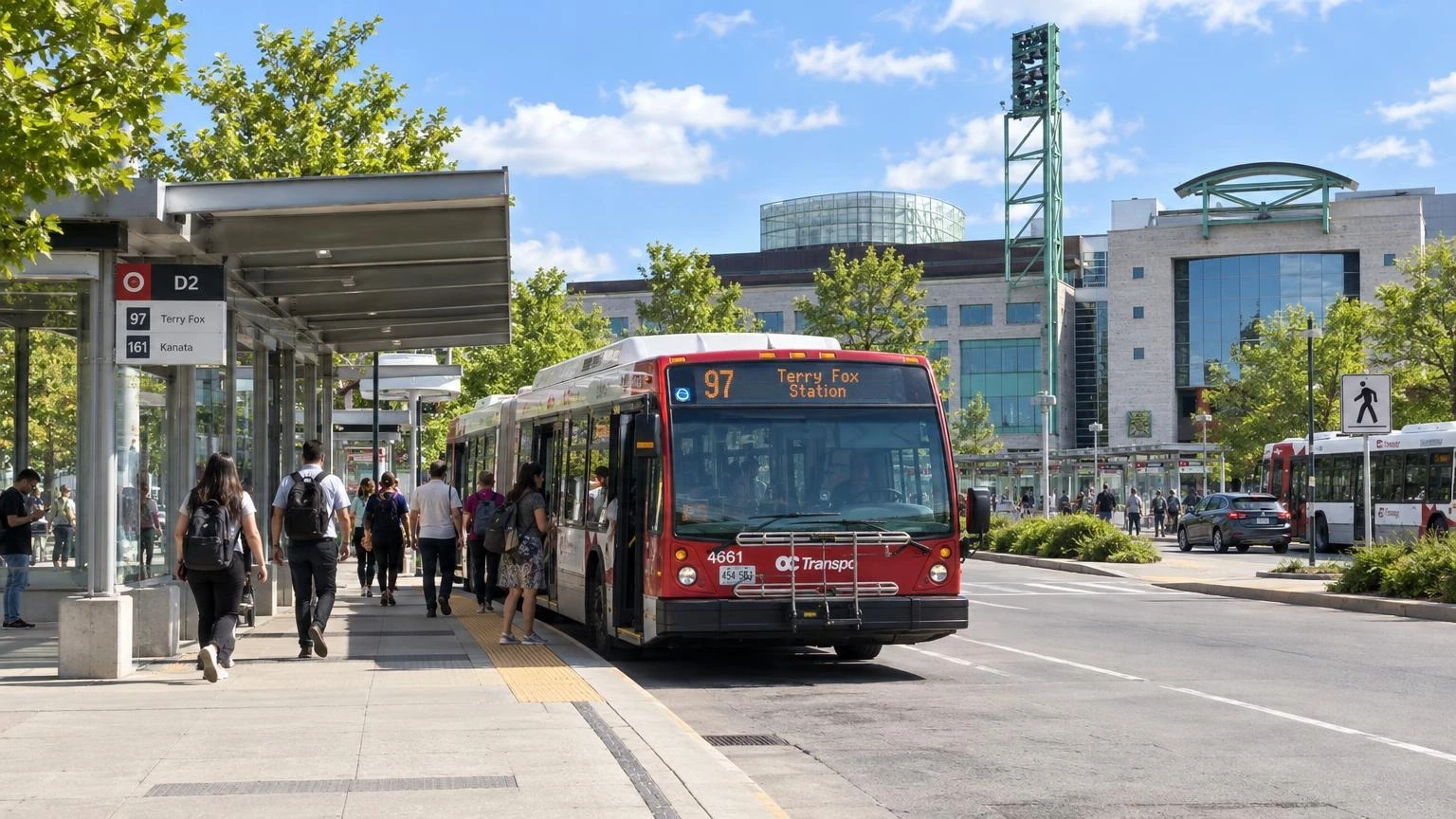
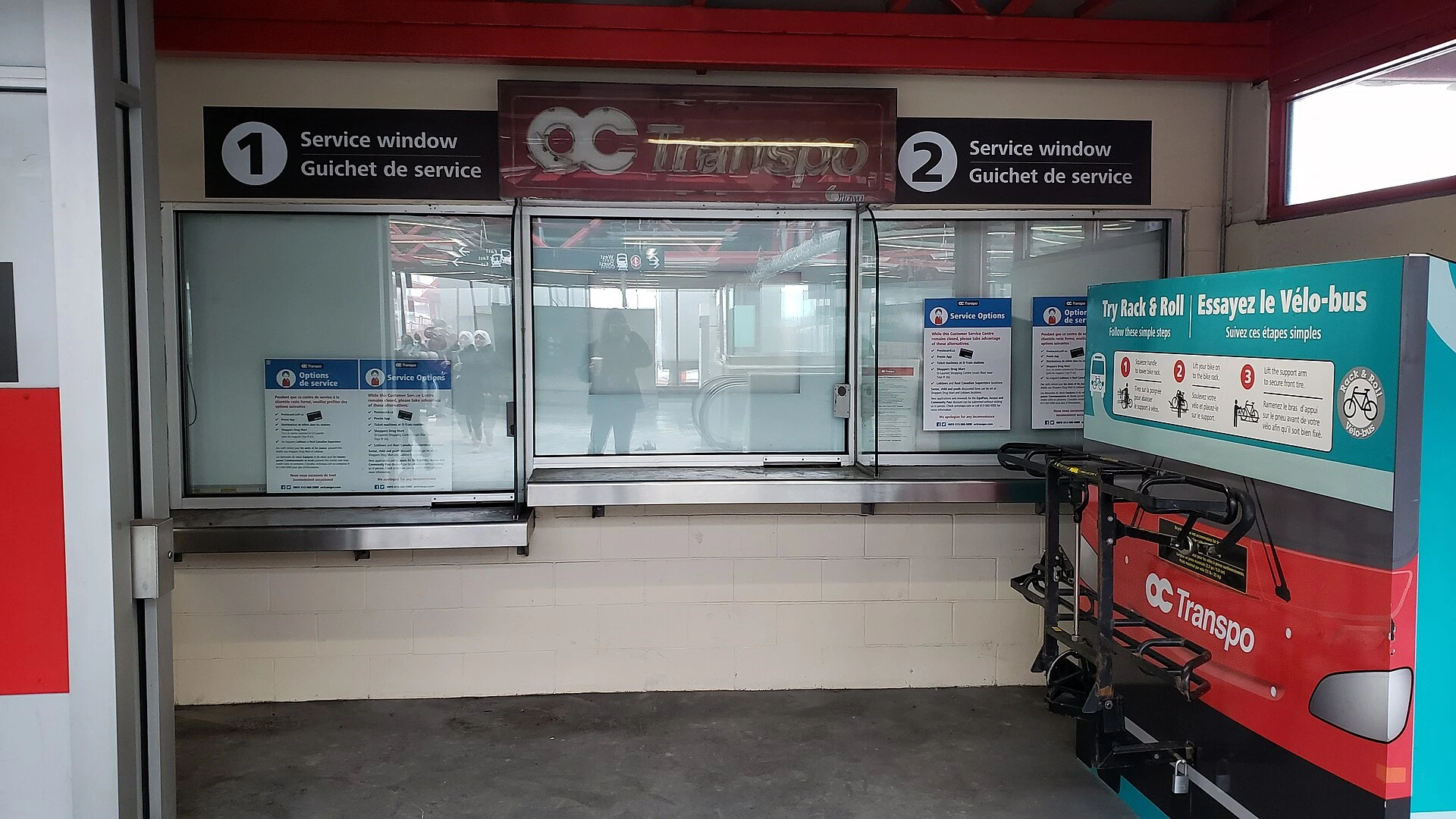
OC Transpo carried 68 million riders in 2024, according to Wikipedia, making it the engine of daily life for commuters across Ottawa. The city's primary public transit agency runs three urban rail lines, 11 bus rapid transit routes and 170 regular bus routes, serving 25 O-Train stations and 43 Transitway stations.
A network built on two spines
The system is organized around its rapid transit spines — the O-Train and the Transitway — fed by express, frequent and local bus routes. Line 1, the electric, fully grade-separated Confederation Line that opened in 2019, accounted for a quarter of all transit trips in the city in 2023.
Outside the core, much of the work is done by orbital suburban routes. Wikipedia notes that Ottawa's busiest routes include frequent routes 88, 6 and 7, none of which are rapid transit. Six rapid bus routes — 57, 61, 75, 39, 45 and 97 — run 24-hour service.
Line 2, the north-south diesel rail line whose biggest trip generator is Carleton University, closed for Stage 2 construction on May 3, 2020, and reopened alongside the new Line 4 airport link on Jan. 6, 2025. It runs every 12 minutes and connects with Line 1 at Bayview.
From horsecars to light rail
Ottawa's first public transportation began in 1886 with horse-drawn streetcars running between New Edinburgh and the Chaudière Bridge. Electric streetcars arrived after Thomas Ahearn founded the Ottawa Electric Railway Company in 1891, bringing heated cars to the downtown core.
The Ottawa Transportation Commission was established in 1948. Transit passed to the Regional Municipality of Ottawa-Carleton in 1973, when the OC Transpo name was adopted, and the agency became a city department after amalgamation took effect in 2001.
The Transitway bus rapid transit network, conceived in the early 1980s, opened with five stations in 1983 and grew steadily into the 2000s, linking Kanata, Barrhaven and Orléans to downtown. Since Line 1 opened in 2019, much of that busway infrastructure has been — or is being — converted to light rail.
Strikes, tragedy and renewal
The agency's history includes labour strife. A 20-day strike in 1979 became known as the five-cent bus strike, fought over a nickel wage difference. A second strike in late 1996 ended under arbitration, and a 51-day strike over scheduling and seniority crippled service through the winter of 2008-09 before every issue was sent to binding arbitration.
On April 6, 1999, a former OC Transpo employee shot six people at the agency's St. Laurent Boulevard garage, killing four before killing himself. An inquest found a poisoned workplace environment, and the agency introduced zero-tolerance harassment policies in response.
On Sept. 18, 2013, a double-decker bus running Route 76 from Barrhaven collided with a Via Rail train at a level crossing near Fallowfield Station, killing six people on the bus and injuring at least 30. The route number was later retired and changed to 72 in recognition of those who died.
What's next
The ongoing Stage 2 expansion will replace more of the Transitway with extensions of Line 1 and a new Line 3, which will interline with Line 1 and add service to Ottawa's west end. Some peak-period routes also cross the river into Gatineau, while Société de transport de l'Outaouais routes run into downtown Ottawa, tying the capital's network to its Quebec neighbours.